My FRC Experience

What is FRC?
FRC is a high-intensity challenge where teams design, build, and program a robot to complete a unique set of tasks. Each year introduces a new game, and teams must collaborate with two alliance partners while competing against three opponents pursuing the same objectives. With only about eight weeks to design and build from scratch, the competition pushes creativity, teamwork, and engineering skills to the limit. Below is an overview of my senior-year challenge, the 2022 competition.
My First Year
As a freshman, I focused on learning how the team operated and what contributed most to its success. While adjusting, I served as Safety Captain, ensuring team members followed proper safety procedures during both build meetings and competitions. This role gave me a clear view of how the team functioned and allowed me to gain hands-on experience whenever possible.
My Sophomore Year
The year started with an off-season competition (an event using the previous year’s robot to give newer members experience). There, I gained valuable time driving the robot. During the official season, I built parts for the robot, including components for the shooter we used in competition. Typically, teams compete in two out of five possible competition weeks. In Week 1, our team attended as observers to see what strategies and designs worked best. From those insights, we decided to redesign our shooter—this happened while the seniors were away on their senior trip. When they returned, they were required to quarantine due to COVID. Soon after, our entire team was sent home, and the season abruptly ended. Despite the challenges, I came away with new skills, teamwork experience, and lessons that carried into future years.
My Junior Year
Junior year was a major period of transition for the team. Although COVID once again limited our season and reduced in-person meetings, it also gave us time to refocus and strengthen our foundation. Our longtime mentor and coach announced he would be retiring at the end of the year, leaving a significant leadership gap that we needed to prepare for.
With the uncertainty ahead, our focus shifted from competition to learning. I took the opportunity to deepen my technical skills and prepare for a leadership role the following year. Much of our time was spent training new members and learning how to safely and effectively use the equipment in the lab, including the CNC machine, drill press, and other fabrication tools. I also became more involved in the robot design process, experimenting with CAD, understanding how the electrical systems were wired, and learning what made our past robots successful.
Even though we didn’t have a full competitive season, this year was incredibly valuable. It taught me the importance of knowledge transfer, teamwork, and preparation, skills that became critical when I stepped up to help lead the team my senior year.
My Senior Year
Over the summer, the school barely managed to find a replacement for the team’s coach, but the new teacher had little interest in robotics. Fortunately, two interns from Drexel stepped in to help, though much of the responsibility ultimately fell on me. With their support and the team’s determination, we set out to build a robot that could compete.
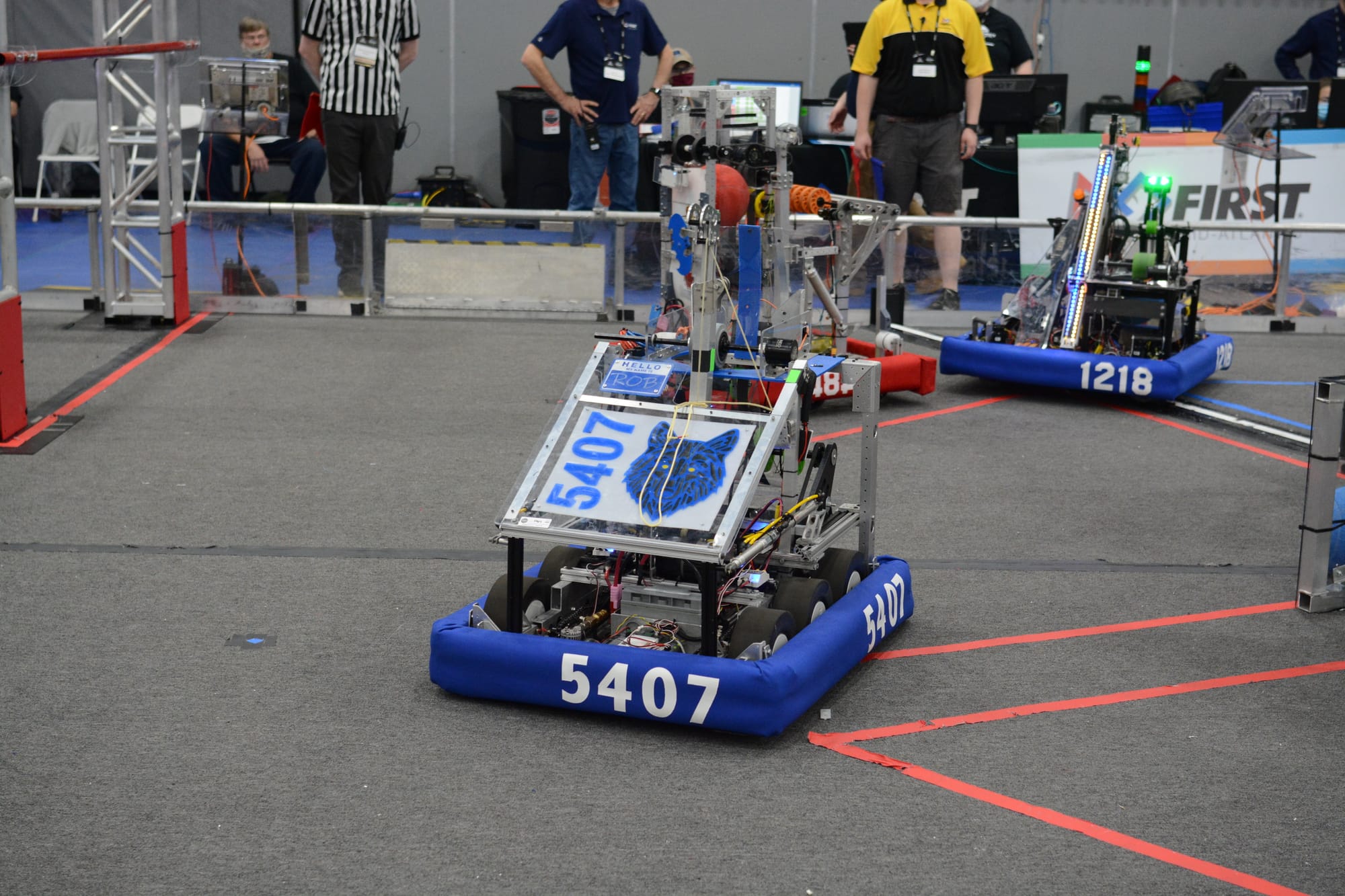
This year’s game required robots to pick up basketball-sized balls, shoot them into a central hoop, and climb a set of “monkey bars” at the end of each match. We prioritized a design that could collect and score balls while climbing to the second level of the bars. Our robot featured large wheels for rolling over the field’s bars, a fixed shooting position for consistency, and a side-mounted climber that swung out of the way when not in use.
In our first competition, we finished 13th out of 28 teams after 12 qualification matches. As the captain of the 8th alliance, we selected teams 708 and 316 to face the top-ranked alliance. Though we didn’t win, we put up a strong fight and gained valuable experience. Between competitions, we upgraded the robot by rebuilding the drivetrain and adding a quick-release climbing system, allowing us to climb faster and more reliably.
At our second event, we placed 26th out of 34 teams. Despite the ranking, we were chosen by the 1st alliance thanks to our strong defensive driving, large wheels, and heavy chassis. These strengths made us tough to score against and ultimately helped our alliance secure the event win. Combined with our earlier performance, this victory earned us a spot at the district championships at Lehigh.
Throughout my experience in FRC, I learned that nothing is impossible, and one that my coach instilled in me was that there where not "problems", just challenges.